
Written by Dr. Adriana Leone, DMD, founder of Wall Street Dental Spa
Yes. A tooth can still decay under a dental crown. The crown itself never rots, but the natural tooth underneath it can, usually right at the margin where the crown meets the gumline. Decay there tends to start quietly and shows up as sensitivity, a strange taste, or a dark line at the edge of the crown. Caught early, it’s a manageable fix. Left alone, it can reach the nerve.
This surprises a lot of my patients. They assume a crown seals the tooth off forever, like wrapping it in armor. I understand why. But a crown caps the tooth; it doesn’t replace it. There’s still a living tooth in there, and that tooth follows the same rules as any other.
I’ve practiced in the Financial District for more than twenty years, and I want to walk you through how this actually happens, what to watch for, and when you should come in.
The weak point is almost always the margin, the seam where the edge of the crown sits against your tooth near the gumline.
When a crown is first placed, that seam is sealed tight with dental cement. Over the years, a few things can open a microscopic gap:
Once there’s even a tiny opening, bacteria and food particles slip underneath, and the same acid process that causes any cavity goes to work on the tooth beneath. This kind of decay at the edge of a restoration is what dentists call recurrent or secondary caries, and research on secondary decay around dental restorations shows it’s one of the main reasons crowns eventually fail.
Because the decay is hidden under porcelain or metal, you often can’t see it, and neither can I without an X-ray. That’s exactly why your routine checkups still matter just as much after you’ve had crown work done.
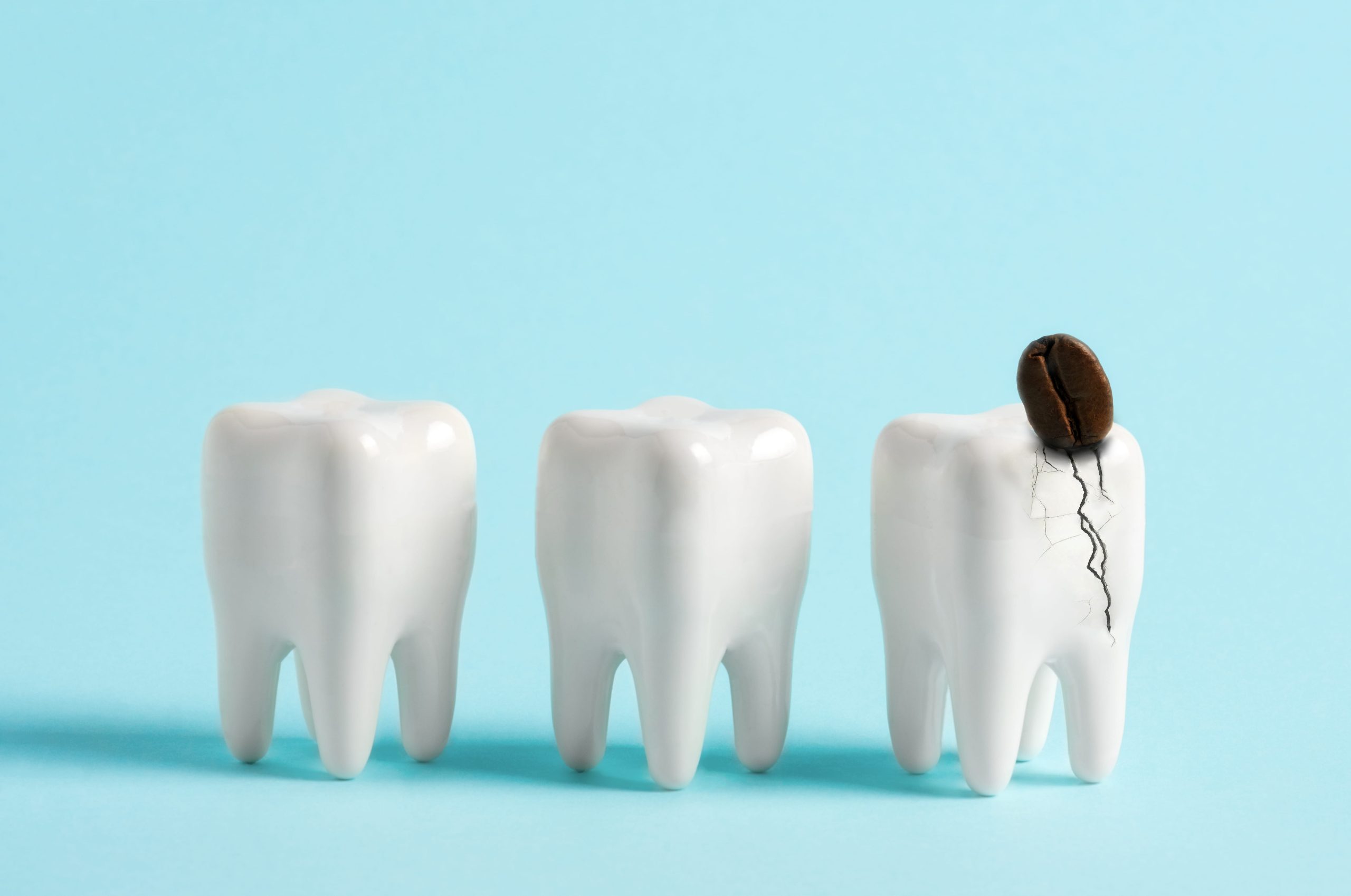
It’s common enough that I check for it at every crown a patient has, but it’s far from inevitable. A well-fitted crown on a tooth you care for can go a decade or two without trouble.
Decay under a crown isn’t a fixed statistic because it depends heavily on the margin fit, your home care, and your overall decay risk. Patients with dry mouth, a high-sugar diet, gum recession, or a history of cavities see it more often.
The encouraging flip side is that the biggest risk factors are the ones you can influence. Daily flossing around the crown, brushing the gumline, and a few diet changes that help prevent cavities genuinely lower the odds.
Most of the visible signs show up at the gumline, since that’s where the trouble usually starts.
You might notice a dark or brown line tracing the edge of the crown, a gray shadow near the gum, or the gum itself looking red, puffy, or pulling away from the crown.
Sometimes the crown’s edge starts to feel rough or catches your floss in a way it didn’t before. In more advanced cases, the crown can feel loose, or you can see an actual softened, discolored tooth peeking out below the porcelain.
None of these are things you should diagnose in the bathroom mirror, but they’re all good reasons to book an exam.
Decay under a crown is often silent at first, so the early clues are usually subtle rather than dramatic.
The signals I’d pay attention to:
The reason early decay is so easy to miss is that the crown can mask it until it’s fairly advanced, which is part of why I rely on periodic X-rays and 3D dental imaging to catch what the eye can’t.
An infection is a step beyond simple decay. It means bacteria have reached the pulp, the nerve, and the blood supply at the center of the tooth, or the bone around the root.
The symptoms get harder to ignore at this stage.
A fever or facial swelling means the infection may be spreading, and that needs prompt attention. If you’re dealing with serious pain or swelling around a crowned tooth, same-day care for dental pain is the right call rather than waiting it out.
Most dental crowns last about 10 to 15 years, and many go well beyond that with good care. Some last 20 years or more.
The numbers back this up. Across large reviews, the majority of crowns are still functioning at the 10-year mark, with clinical studies of crown survival reporting high success rates over five and ten years.
Material plays a role, and so does the tooth’s location, since a molar takes far more force than a front tooth. What shortens a crown’s life most isn’t usually the crown breaking but what happens at the margin, including the recurrent decay we’ve been talking about, grinding, and gum changes over time.
A crown that’s cared for and checked regularly tends to age gracefully.
Treatment depends entirely on how far the decay has traveled, and I’d rather catch it early so the options stay simple.
If the decay is small and the crown is otherwise sound, sometimes I can treat the area and reseal it. More often, the crown needs to come off so I can clean out all the decay and place a new one over healthy tooth structure.
If the decay has reached the nerve, the tooth may need root canal treatment before a new crown goes on.
And in the cases where too much tooth has been lost to save it, a gentle extraction followed by a replacement plan is the more honest path. Every step up that ladder is a reason to come in at the first hint of a problem rather than the last.
Yes. The crown itself doesn’t decay, but the natural tooth beneath it can, most often at the margin where the crown meets the gumline. A small gap in the seal lets bacteria reach the tooth, leading to decay that’s hidden by the crown until it’s found on an exam or X-ray.
The common signs are a dark or brown line along the crown’s edge, a gray shadow near the gum, red or receding gums around the crown, or a rough margin that catches floss. In advanced cases, the crown may loosen or expose softened, discolored tooth structure near the gumline.
An infected tooth under a crown usually causes throbbing or constant pain, pain when biting, swelling in the gum or face, a pimple-like bump on the gum, a bad taste, or lingering sensitivity. Facial swelling or fever suggests the infection is spreading and needs prompt dental care.
It’s a common reason crowns eventually fail, but it isn’t inevitable. The risk depends on the margin fit, oral hygiene, gum recession, and your overall cavity risk. Good home care and regular checkups significantly lower the chance of decay developing under a crown.
Early decay under a crown is often painless. Watch for new sensitivity to cold, heat, or sweets, a dull ache, a persistent bad taste, floss that snags at the crown’s edge, or food packing into one spot. X-rays during routine visits catch hidden decay before symptoms appear.
Most crowns last 10 to 15 years, and many last 20 years or longer with good care. Longevity depends on the crown material, the tooth’s location, bite forces, oral hygiene, and whether decay develops at the margin. Regular checkups help a crown reach the high end of that range.
Dr. Adriana Leone, DMD, is the founder of Wall Street Dental Spa in Manhattan’s Financial District. A graduate of Tufts University School of Dental Medicine, she has practiced dentistry since 1999 and opened her boutique practice in 2005. Dr. Leone is recognized among America’s Top Dentists and is one of New York City’s most experienced Invisalign providers, with more than 500 cases completed. She built Wall Street Dental Spa around calm, judgment-free, wellness-focused care for busy NYC professionals.
