Written by Dr. Adriana Leone, DMD, founder of Wall Street Dental Spa
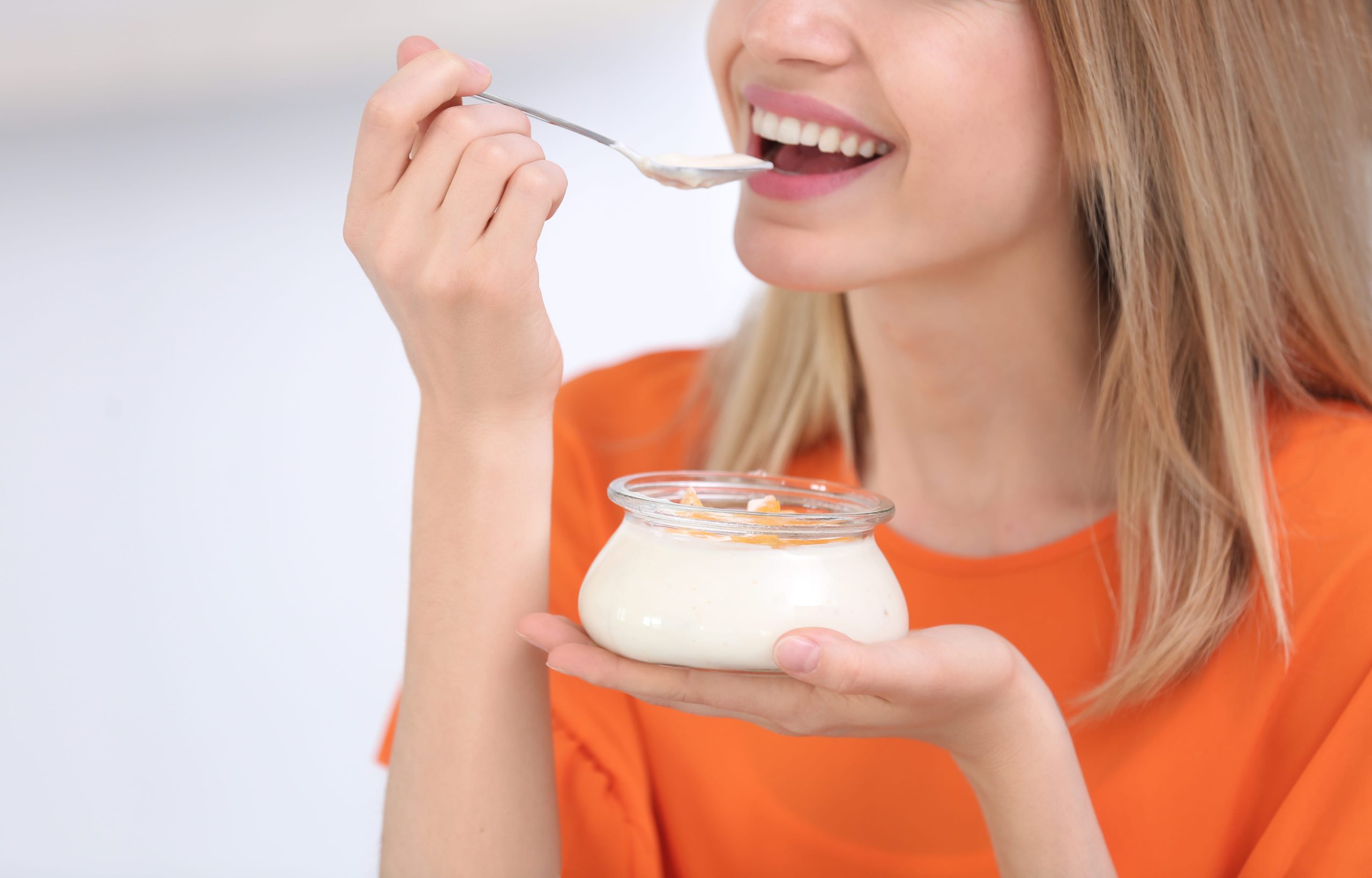
After a tooth extraction, eat cool, soft foods that need no chewing or suction for the first 24 hours, then add texture over 7 days. Most of my patients want a number, not a food list. Here is what changes on each day, and why the rule changes at all.
| When | What you can eat | What to skip | Why |
|---|---|---|---|
| First 24 hours | Cool or room-temperature foods that take no chewing: yogurt, applesauce, pudding, blended soup, broth, smoothies eaten with a spoon | Straws, hot food and drinks, alcohol, smoking, anything crunchy, anything you have to bite into | The blood clot forms within the first few hours and holds on by itself. Heat and suction are what pull it loose. |
| Days 2 to 3 | Mashed potatoes, scrambled eggs, cottage cheese, ripe avocado, well-cooked pasta, flaked soft fish | Rice, seeds, nuts, chips, crusty bread, spicy food | Swelling usually peaks around 48 to 72 hours, so your tolerance for texture drops even while the socket heals. |
| Days 4 to 7 | Oatmeal, soft bread with the crust off, ground meat, cooked vegetables, ripe fruit | Anything you would tear with your front teeth, hard candy, popcorn | Surface tissue is closing over the socket. Chewing on the opposite side is still the rule. |
| Week 2 onward | Most of your normal diet, added back one texture at a time | Whatever still hurts | Comfort becomes the test instead of the calendar. Pain while chewing means dropping back a step. |
You can eat once the bleeding has slowed and the numbness has fully worn off. For a routine tooth extraction, the numbness in my patients usually fades within two to four hours, and I would rather you wait that out than eat through it.
Numb tissue is the part people underestimate. Your cheek and tongue cannot tell you that you are biting them, and I have seen patients arrive the next day with a chewed lip that hurts more than the socket does.
Wait until the anesthetic has worn off completely, usually two to four hours, then start with something cool that requires no chewing. Bite gently on your gauze until the bleeding slows. The American Dental Association’s guidance is to follow the diet your dentist sets for you, since a surgical socket and a simple one heal on different schedules.
A patient of mine works two blocks from the office and books her appointments around her calendar. She had a lower molar out at 11am and a dinner reservation downtown at 7pm that she was not willing to cancel. She kept the reservation. She ordered soup, ate it lukewarm with a spoon, and skipped the wine. That is a realistic day one, and no one at the table noticed.
Food in the first day should be cool or room temperature and should slide down with no chewing at all.
Good options include:
Two things trip people up on day one. The first is temperature, because hot coffee and hot soup can irritate the site and raise the odds of renewed bleeding. Let anything warm sit until you could hold the cup against your cheek comfortably.
The second is suction. A smoothie is a perfect day-one food and a terrible day-one habit, because almost everyone drinks one through a straw without thinking. Use a spoon and the problem disappears.
Days two and three are when you can add soft solids, as long as they break apart under gentle pressure from your tongue.
Scrambled eggs, mashed potatoes, cottage cheese, well-cooked pasta, and soft flaked fish all work here. Each one gives you protein, which matters more than people expect during recovery, since you are asking your body to rebuild tissue on a lighter diet than usual.
Swelling normally peaks somewhere around 48 to 72 hours. Your face may look worse on day three than it did on day one while the socket underneath is doing fine, so judge your progress by pain and bleeding rather than by the mirror.
By day three, soft solids are usually comfortable: eggs, mashed vegetables, soft pasta, cottage cheese, and flaked fish. Chew on the opposite side and cut everything smaller than you normally would. Skip rice, seeds, and anything grainy, because small particles are the ones that settle into an open socket.
Days four through seven are when most of the food you miss comes back, one texture at a time.
Oatmeal is the usual first request, and it tends to work around day two or three once a stable clot has formed, though instant oats are gentler than steel-cut. Soft bread with the crust removed, ground meat, cooked carrots, and ripe fruit all belong in this stretch too.
The rule that still applies is where you chew, not what you chew. Keep every bite on the opposite side of your mouth, and cut your food small enough that you never tear anything with your front teeth.
If something hurts, stop eating it and try again in two days. Pain is a reasonable guide at this stage, and pushing through it gains you nothing.
Patients are usually back on a normal diet somewhere between 7 and 14 days after a simple extraction, and the socket itself continues filling in for weeks after that.
The date on the calendar matters less than how the site feels. A person who had one loose lower tooth removed may be eating normally by day five. Someone who had an impacted wisdom tooth sectioned out may still be favoring one side at day ten. Both are healing correctly.
Plan on soft food for about a week after a simple extraction, and up to two weeks after a surgical one. Reintroduce firmer textures gradually, keeping them away from the healing side. If chewing produces a sharp or throbbing pain rather than mild soreness, go back to softer food and call your dentist.
Once you are eating normally again, the same diet changes that help prevent cavities apply as they did before. If we discussed replacing the tooth with a dental implant, your diet during that healing window is something we plan together at your follow-up.
A surgical extraction resets every number in the table above, usually adding three to seven days to each stage.
Simple extractions remove a tooth that is fully visible above the gumline. Surgical extractions involve cutting gum tissue, sometimes removing a small amount of bone, and often sectioning the tooth into pieces. Wisdom tooth removal usually falls into the second category, and lower wisdom teeth are the most demanding of all.
Stitches change things too. Sutures hold the tissue closed while it knits, and food packed against them can pull at the edges. If you have stitches, stay on the softer end of each stage a little longer than the timeline suggests.
Sedation adds one more variable. If you had IV sedation, you were asked to fast beforehand, so you will be hungry the moment you get home, and your judgment about what feels chewable will not be at its sharpest for several hours. Have someone else decide what you eat that first evening.
If chewing hurts more today than it did yesterday, or you are not sure whether something is safe on the healing side, we would rather hear from you than have you guess.
Call 646-566-3307 if it cannot wait.
Avoid anything hard, crunchy, sticky, spicy, very hot, or small enough to fall into an open socket.
Red flags:
Three foods hide inside every standard soft-food list and cause more trouble than they are given credit for. Smoothies qualify only when you eat them with a spoon. A bowl of plain ice cream is fine, though the cookie pieces, nuts, and cone are not. Rice looks like the safest thing in your kitchen and is one of the worst, because each grain is the right size to settle into a socket and stay there.
Water is your best option for the first day, and everything else has a timing rule attached.
Wait at least 24 hours, then drink it lukewarm rather than hot, from a cup and never a straw. Heat is the problem more than the caffeine. Iced coffee is a reasonable early option if you leave out the ice and drink it at room temperature. Give it 48 hours after a surgical extraction.
Carbonated drinks are usually held for three to seven days in standard post-operative guidance, since the bubbles agitate the surface of the clot. Alcohol should wait until bleeding has fully stopped, and longer if you are taking prescribed medication.
Hydration itself helps you more than most people realize during recovery, because a dry mouth is an uncomfortable mouth. Drink plenty of water, at room temperature, straight from the glass.
Dry socket happens when the blood clot in the socket is lost or fails to form, leaving bone exposed, and food is a smaller factor in it than the internet suggests.
Think of the clot as a scab that cannot be covered. A scab on your arm gets a bandage and stays dry and still. The clot in your socket sits in a warm, wet place that moves every time you swallow, with nothing holding it down except its own grip on the bone. Protecting it is mostly about not pulling on it.
The measured risk is lower than most patients fear. Research on third molar extractions puts dry socket at roughly 1% to 5% of routine extractions and up to about 30% of surgically removed lower wisdom teeth. A 2026 review of 3,033 lower wisdom teeth removed by a single surgeon found an overall rate of 2.6%.
What that same body of research points to is instructive. The strongest documented risk factors in the third molar study were smoking and poor oral hygiene, not any particular food. The American Dental Association’s post-extraction guidance is to avoid straws for 24 hours, avoid smoking, and rinse gently rather than vigorously, and those three instructions do more for you than any food list.
Dry socket pain has a recognizable pattern. Discomfort that was fading suddenly intensifies between one and three days after the extraction, often radiating toward the ear or temple, and over-the-counter pain relief stops helping. A bad taste or odor sometimes comes with it.
Pain that worsens after day two instead of improving is a reason to call us, not a reason to wait it out. Same-day care for dental pain exists precisely for this, and the fix is quick once we can see the site.
Wait about a week. Rice is soft but grainy, and individual grains are exactly the right size to settle into an open socket where rinsing will not reach them. Well-cooked pasta or mashed potatoes give you a similar meal without the risk. The same caution applies to quinoa, couscous, and seeds.
Yes, on day one, as long as it is plain. Cold food can ease swelling and soreness in the first 24 hours. Skip any version with cookie pieces, nuts, candy, or a cone, and eat it with a spoon rather than drinking a milkshake through a straw.
The ADA advises avoiding straws for at least 24 hours after an extraction. After a surgical or wisdom tooth extraction, most surgeons extend that to about a week. Suction is the concern, since it can pull the clot away from the bone. Drink from the edge of the glass until your dentist clears you.
Rinse gently with warm salt water, about half a teaspoon of salt in a cup of water, starting 24 hours after your extraction. Let the water fall out of your mouth instead of spitting forcefully. Never poke the site with a toothpick, your tongue, or a finger. Call us if something will not clear.
Wait until the bleeding has completely stopped, which usually means at least 24 hours. Wait longer if you were prescribed pain medication or antibiotics, since alcohol can interact with both. Alcohol also dehydrates you and can irritate the healing tissue, which makes the first few days more uncomfortable than they need to be.
Soft bread with the crust removed is usually comfortable around day four or five. Avoid crusty, toasted, or seeded bread for at least a week, since hard edges can scrape the site and seeds can lodge in it. Cut each piece small and chew on the opposite side of your mouth.
Dr. Adriana Leone, DMD, is the founder of Wall Street Dental Spa in Manhattan’s Financial District. A graduate of Tufts University School of Dental Medicine, she has practiced dentistry since 1999 and opened her boutique practice in 2005. Dr. Leone is recognized among America’s Top Dentists and is one of New York City’s most experienced Invisalign providers, with more than 500 cases completed. She built Wall Street Dental Spa around calm, judgment-free, wellness-focused care for busy NYC professionals.
