Written by Dr. Adriana Leone, DMD, founder of Wall Street Dental Spa
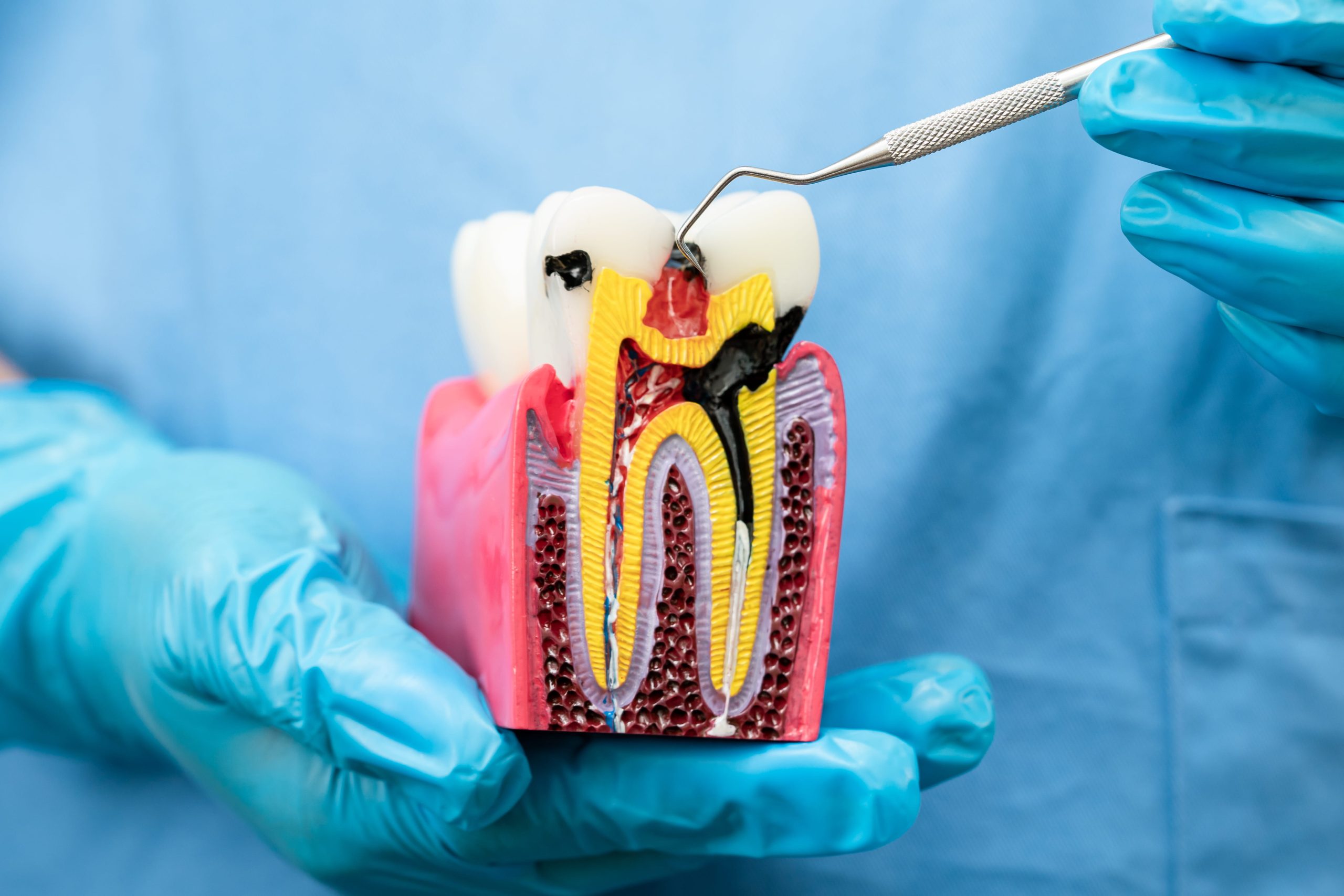
The five stages of dental decay are initial enamel demineralization, enamel decay, dentin decay, pulp infection, and abscess. The first stage can often be reversed with fluoride and better home care, before any hole forms. Once decay breaks through the enamel surface, it needs a filling. The further it goes, the bigger the treatment becomes, moving from a filling to a crown, a root canal, and eventually extraction.
That’s the map. Now let me walk you through what’s actually happening inside the tooth at each point, because the stage you’re in changes everything about what I’d recommend.
I’ve practiced in the Financial District for more than twenty years, and I’ve watched the same small white spot go two very different directions depending on what a patient did next.
A cavity isn’t a single event. It’s a slow shift in the balance between the minerals leaving your enamel and the minerals going back in.
Every time you eat, the bacteria in plaque feed on sugars and produce acid. That acid pulls calcium and phosphate out of the enamel for a while. Saliva and fluoride push those minerals back in.
When the pulling outpaces the repair, day after day, the surface starts to break down in a predictable order. Understanding that order is what lets you catch the problem while it’s still cheap and painless to fix.
The earliest sign of decay is a chalky white spot on the enamel, usually near the gumline or in the grooves of a back tooth.
At this point, the enamel is softening, but the surface is still intact. There’s no hole yet. This is the one stage that can often heal on its own, which surprises a lot of patients.
With fluoride, careful brushing, and less frequent sugar exposure, the minerals can flow back in, and the spot can stabilize. If you’ve noticed white lines on teeth, this is often what we’re looking at, and it’s worth an evaluation while the window is still open.
This is also where home habits do real work. I walk patients through how to remineralize teeth all the time, and the changes are simple:
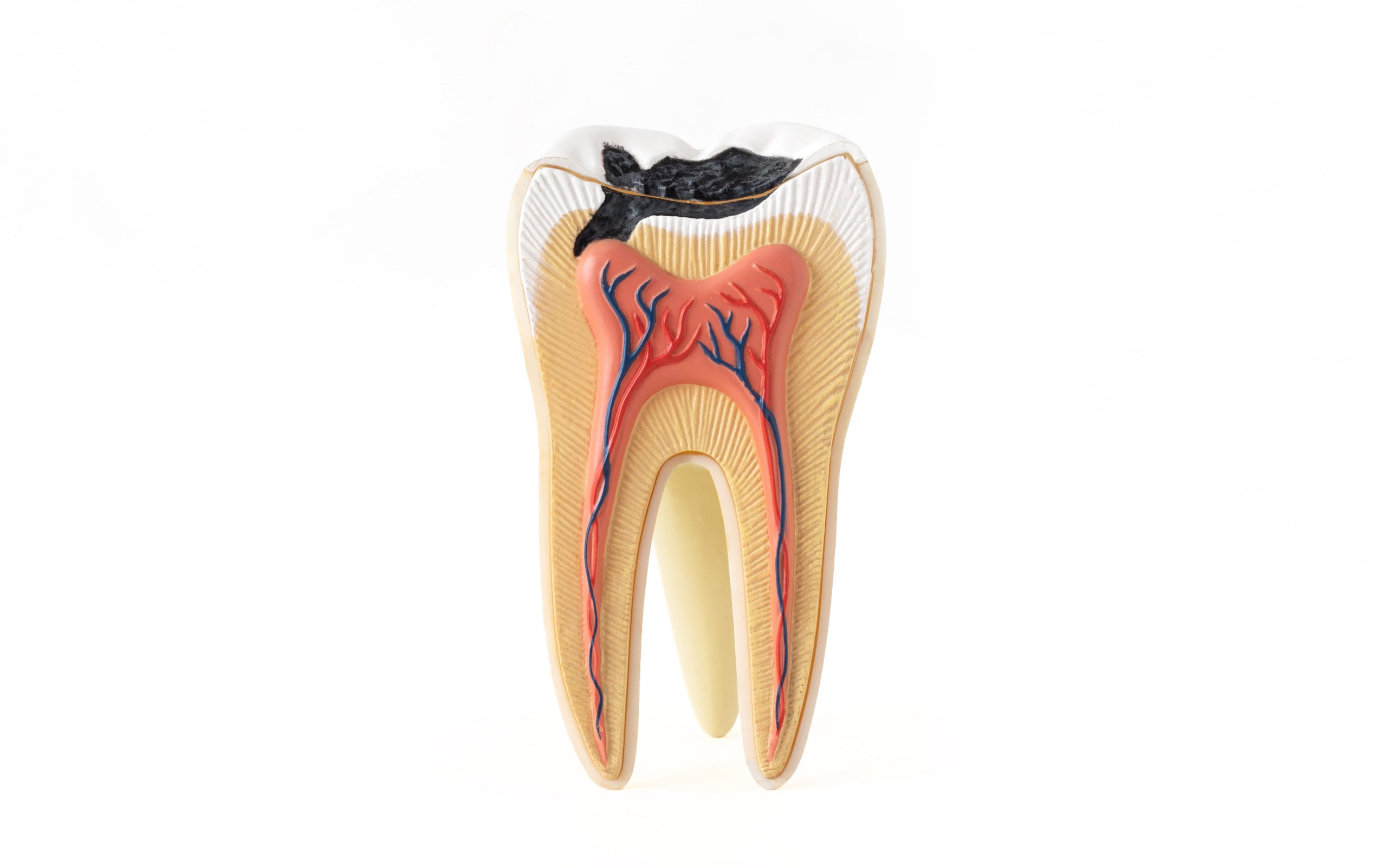
When demineralization keeps going, the enamel surface finally gives way, and a true cavity forms. The white spot may darken to brown.
Once there’s an actual break in the enamel, remineralization can no longer fix it. The tooth can’t regrow the lost structure. A small filling is the standard treatment now, and it’s a quick, comfortable appointment.
The reason I push to catch decay here is straightforward: a filling at this stage protects almost all of the natural tooth. Waiting only means removing more of it later.
Beneath the enamel sits dentin, a softer, more porous layer. Decay moves through dentin faster than it moves through enamel, and this is usually when patients first feel something.
Sensitivity to cold, sweet, or hot. A twinge when you bite down. The discomfort comes and goes at first, which is exactly why people talk themselves out of calling. A filling may still work if we catch it early in this layer.
If the decay has taken out a larger portion of the tooth, I’ll often recommend a crown to restore strength to the tooth, since a big filling in a weakened tooth tends to fail over time.
At the center of every tooth is the pulp, where the nerves and blood vessels live. When decay reaches it, the tissue becomes inflamed and then infected.
This is the throbbing, keeps-you-up-at-night pain people dread. It can radiate to your jaw or ear, and over-the-counter painkillers stop touching it. By this stage, a filling won’t help. Saving the tooth usually means root canal therapy for an infected tooth, which removes the infected pulp and seals the tooth, almost always followed by a crown to protect what remains.
Root canals have a frightening reputation they no longer deserve. Done well, the appointment feels a lot like getting a filling.
If the infection isn’t treated, it spreads beyond the root tip and forms an abscess, a pocket of pus at the base of the tooth or in the surrounding bone.
This is the serious one. You might notice:
A dental abscess can become a medical emergency if the infection spreads, so it shouldn’t be ignored.
Treatment depends on the damage. Sometimes the tooth can still be saved with a root canal and drainage. Sometimes the tooth is too far gone and needs removal with a gentle tooth extraction.
If you’re in this kind of pain or you see swelling, same-day help for dental pain matters more than waiting for a regular appointment slot.
The simplest tell is pain that lingers. Early decay is silent, so by the time a tooth genuinely hurts, the problem has usually reached dentin or deeper.
A few signals I’d treat as a reason to come in soon:
Swelling, a fever, or pain you can feel in your jaw points toward the later stages and needs prompt care. A white spot with no pain, on the other hand, is usually early, and that’s good news. The catch is that you can’t reliably stage your own decay by feel, since a tooth can look fine and still hide decay between the teeth or under an old filling. That’s what the exam and X-rays are for.
No, and I want to be clear about that, because shame keeps more people out of my chair than pain does.
Decay is influenced by things you don’t choose. Genetics shapes your enamel strength and saliva. Some medications dry out your mouth, which removes your natural defense against acid.
Acid reflux, certain diets, the depth of the grooves in your teeth, even braces can all raise your risk.
It’s genuinely common, too. According to the CDC’s oral health surveillance data, more than one in five U.S. adults has untreated tooth decay right now. You are not an outlier, and you are not in trouble with me. I built this practice around judgment-free dental care for exactly this reason. What you do next matters far more than how you got here.
That said, daily habits do move the needle, which is empowering rather than blaming. Brushing, flossing, fluoride, and a few diet changes that help prevent cavities give you real influence over the outcome.
There’s no single timeline, and anyone who gives you an exact number is guessing. Decay can crawl for years or accelerate in months.
Enamel is the hardest substance in your body, so decay tends to move slowly through stages one and two, sometimes taking several years. Once it reaches the softer dentin in stage three, it usually speeds up.
The pace depends on your saliva, your diet, your fluoride exposure, and where the cavity sits, since decay between teeth or on a root surface progresses faster.
A useful way to think about it: the early stages are slow and forgiving, and the later ones are fast and unforgiving. That’s the whole argument for regular checkups. We can spot a stage-one or stage-two problem long before it ever announces itself.

I wouldn’t, and here’s the honest reasoning. A true cavity, meaning decay that has broken through the enamel, does not heal. It only grows.
Waiting two years on an active cavity is how a small filling becomes a root canal or an extraction. What may feel like saving money now usually costs more later, both in dollars and in terms of tooth.
There’s one exception worth understanding, and it leads straight into the next question.
There isn’t an official rule, but the phrase usually points to one of two things, and they get confused often.
Sometimes people mean the gap between visits. Going roughly two years without a checkup is long enough for a quiet stage-one spot to progress into something that needs real treatment, which is why I recommend seeing a dentist every six months for most patients.
The other meaning is what dentists call “watching” a tooth. When I spot a very early lesion that hasn’t broken through the enamel yet, I may choose to monitor it rather than drill, because filling it would mean removing healthy tooth structure to treat decay that still has a chance to remineralize.
Research on early caries detection and monitoring supports this conservative approach for the right lesions. Watching is not ignoring. It means I’m checking that spot at every visit, supporting it with fluoride, and stepping in the moment it starts to move.
There’s a real difference between a dentist monitoring an early lesion on purpose and a cavity being left to grow.
If it’s been a couple of years or more since your last visit and you’ve been putting it off, please know it’s never too late to come back to the dentist. I’d genuinely rather see you now than after another silent year.
The five stages are initial enamel demineralization, enamel decay, dentin decay, pulp infection, and abscess. Only the first stage, before a hole forms, can typically be reversed. Every stage after that requires treatment, ranging from a filling to a root canal or extraction.
Only the first stage, initial demineralization, can be reversed. At that point, the enamel has softened, but no cavity has formed, so fluoride, good brushing, and reduced sugar exposure can help the enamel remineralize. Once decay breaks the enamel surface, it needs a filling.
No. Early decay is usually painless, which is why it often goes unnoticed. Pain typically begins once decay reaches the dentin or pulp, meaning a tooth that hurts has usually advanced to a later stage. A pain-free white spot is generally an early, more treatable sign.
It varies widely, from several years to a few months. Decay moves slowly through hard enamel and faster through softer dentin. Saliva, diet, fluoride use, and the cavity’s location all affect the pace, which is why regular checkups catch problems before they reach the nerve.
Only at the earliest stage, before the enamel surface breaks. A softened white spot can remineralize with fluoride and improved home care. Once an actual hole forms, the tooth cannot rebuild that structure, and the cavity needs to be cleaned out and filled.
Dr. Adriana Leone, DMD, is the founder of Wall Street Dental Spa in Manhattan’s Financial District. A graduate of Tufts University School of Dental Medicine, she has practiced dentistry since 1999 and opened her boutique practice in 2005. Dr. Leone is recognized among America’s Top Dentists and is one of New York City’s most experienced Invisalign providers, with more than 500 cases completed. She built Wall Street Dental Spa around calm, judgment-free, wellness-focused care for busy NYC professionals.
